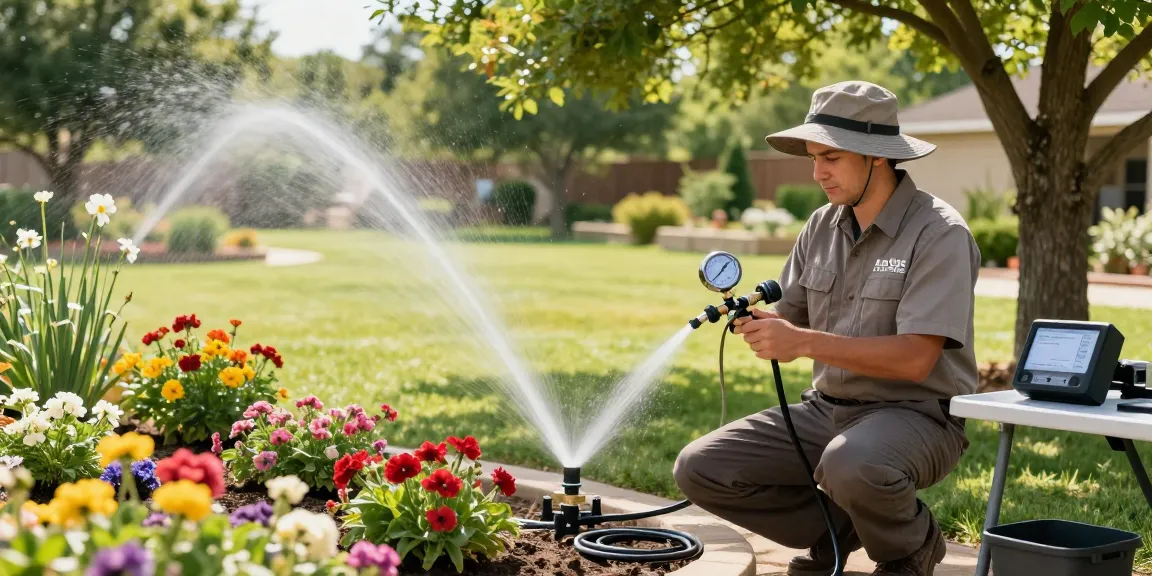
When Claire moved into her suburban home in Phoenix, she found brown rings around her rose bushes and soggy patches under the old rotary heads. Her vegetable patch on the side yard was wilting by noon while the lawn near the street stayed lush. She needed a way to stop wasting water on the wrong places and get steady moisture where it mattered. This article matches common watering problems to the right irrigation setups so you can upgrade to a water-saving lawn with RainPoint without guessing.
What’s the main difference between drip irrigation and sprinklers?
Problem: You’re watering too much area at once or applying water too fast, which causes runoff and high bills.
Solution: Use the right tool for the zone. Sprinklers spray water into the air to cover broad areas quickly; drip systems deliver water slowly at the soil line or root zone. That means drip is precise and reduces evaporation, while sprinklers are efficient for uniform lawns when placed correctly.
Concrete example
A 1,000 sq ft lawn with pop-up spray heads may need 0.5–0.75 inches of water per session. If the soil is compacted or slopes, 30–40% of that can run off. By contrast, a drip line providing 0.5–1.0 GPH (gallons per hour) emitters to a vegetable bed delivers water where roots are and prevents runoff.
According to the EPA, smart irrigation controllers and efficient systems can save thousands of gallons per home each year; smart controllers alone can save up to 15% or more of outdoor water use (EPA WaterSense). For many yards, pairing a smart timer with the right irrigation style multiplies savings.
Which setup is best for my specific yard problems?
Problem: Patchy watering — some beds are drowned, others dry out.
Solution: Create separate zones for different plant types. Match each zone to the correct hardware.
- Small lawn, flat terrain: low-pressure rotary or pop-up spray heads on a timer. Good uniform coverage with short run times.
- Large lawn or irregular zones: in-ground rotor heads with a WiFi-enabled controller for seasonal adjustments; these handle larger areas with fewer heads.
- Vegetable gardens: drip tape or point-source drip kits with pressure regulation to feed rows and containers precisely.
- Flower beds and shrubs: soaker hoses or micro-drip lines tucked under mulch to wet the root zone without wetting foliage.
- Potted plants and hanging baskets: slow-drip self-watering stakes or small reservoir systems to avoid daily hand watering.
Scenario example: Mark has a 3,000 sq ft mixed yard with a lawn, raised beds, and lots of pots. Splitting it into four zones—rotors for the lawn, a drip kit for the beds, soaker hoses for shrub lines, and self-watering for patio pots—cut his watering time in half and fixed over- and under-watering.
Zone TypeBest SetupTypical Run TimeLawnRotors or pop-ups15–30 min / sessionVeg gardenDrip tape / emitters30–60 min / sessionFlower bedsSoaker hose / micro-drip45–90 min / sessionPotsSelf-watering or drip stakes30–60 min / session
How does drip irrigation save water compared to sprinklers?
Problem: Your sprinkler system sprays the sidewalk and driveway, and hot sun evaporates much of the water.
Solution: Switch beds, hedges, and vegetable rows to drip where water is applied directly at the root zone. Drip systems cut evaporation and wind drift because water never goes airborne.
Numbers that matter
University extension studies routinely show drip irrigation can reduce water use by 30–50% for landscape beds and vegetable gardens compared with overhead watering (state extension services such as UC ANR report similar ranges). For example, a 20–30 ft bed watered by drip emitters at 0.5–1.0 GPH might use 10–20 gallons per hour vs. a spray head that applies 0.5 inches over the same area in far less time but with more loss.
Real case: A homeowner converted three raised beds to a drip kit and saw soil moisture remain stable with 40% fewer gallons per week during the peak summer months.
Can I mix drip and sprinklers on the same property? How do I automate that?
Problem: You want the convenience of automated schedules but different zones have different needs.
Solution: Use a multi-zone controller and proper plumbing. Each zone runs independently on its own schedule: lawngrass gets shorter, more frequent sessions; beds get longer, less frequent drip cycles. A WiFi timer such as the RainPoint model lets you program multiple zones, make seasonal adjustments, and pause watering during rain events.
Practical setup tip: Install pressure regulators and filter screens where drip lines start; drip needs lower pressure than sprinklers. If you have a 6-station controller, dedicate 2 stations to the lawn rotors, 2 to drip lines for beds, 1 to soaker lines for hedges, and 1 to pot irrigation or manual taps.
If you want a guided starting point for redesigning your yard around efficiency, a resource that walks through zone ideas and product matches will help you upgrade to a water-saving lawn with RainPoint.
How do I choose components and what are common mistakes to avoid?
Problem: People buy either all drip or all sprinklers without considering soil, slope, and plant type, then wonder why plants suffer.
Solution: Match equipment to need and avoid common pitfalls.
- Assess soil and slope: sandy soils need more frequent watering; clay soils need longer, slower watering to avoid runoff.
- Pressure match: use a pressure regulator for drip and check manufacturer specs for sprinkler heads.
- Use a programmable timer: set different schedules per zone and use seasonal adjustments.
- Mulch beds after installing drip or soaker lines to reduce evaporation by up to 30%.
- Test and adjust: run each zone and observe coverage and soil penetration; tweak run times.
Example: Jenna installed a drip kit but skipped the filter. Emitters clogged within weeks. Adding a simple inline filter and a 25 PSI regulator fixed the issue and restored reliable delivery.
For many homeowners the smart move is combining the right hardware with remote scheduling. A WiFi timer from RainPoint can handle varied schedules and offers weather adjustments so you don’t need to babysit irrigation during heat waves or rain spells.
One helpful reference for controller efficiency and water savings is the EPA WaterSense program; it explains how smart controllers reduce wasted outdoor water use.